
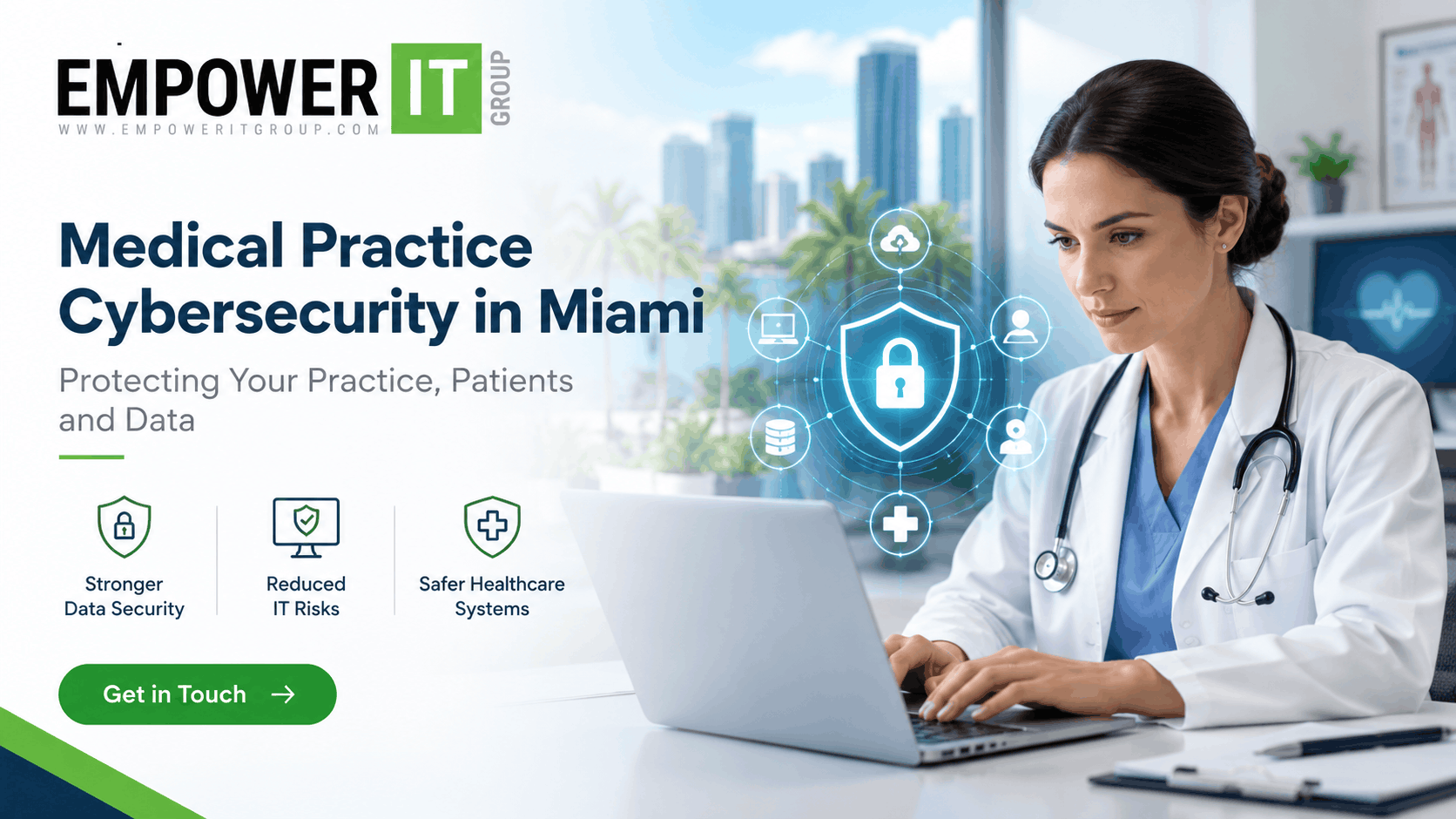
Cybersecurity Solutions to Help Protect Medical Practices and Patient Information
Medical practices depend on connected systems to manage patient records, coordinate appointments, communicate with staff, and support daily operations. However, unsecured devices, phishing emails, weak passwords, and outdated systems can expose healthcare organisations to cybersecurity threats.
Empower IT helps medical practices in Miami strengthen their IT security through practical cybersecurity measures designed around their technology environment and operational needs. From identifying potential vulnerabilities to improving access controls and protecting connected devices, the focus is on reducing avoidable risks and supporting more secure medical office operations.
Looking to strengthen your medical practice’s cybersecurity? Contact Empower IT to discuss your security requirements.
Cybersecurity for Medical Practices in Miami
Medical practices manage sensitive information and rely on technology that must remain accessible to authorised users. A cybersecurity incident can disrupt administrative workflows, affect access to important systems, and expose confidential information.
Empower IT helps medical practices assess technology-related risks and identify appropriate security improvements. This may include reviewing device protection, user permissions, network security, software updates, and backup arrangements.
The right cybersecurity approach considers both the technology a practice uses and how employees access, manage, and share information.
Medical Cybersecurity Services to Address Common Threats
Cybersecurity requires more than installing security software. Medical practices benefit from a layered approach that considers users, devices, networks, data, and recovery processes.
Phishing and Email Security
Phishing messages can trick staff into revealing credentials, opening malicious attachments, or sharing sensitive information. Email security measures and employee awareness can help reduce exposure to these attacks.
Endpoint and Device Protection
Computers, laptops, and other connected devices can become entry points for cyber threats. Appropriate endpoint protection, security updates, and device management help reduce vulnerabilities across the practice’s technology environment.
Network Security
A properly managed network helps control access to systems and connected devices. Network security measures can include reviewing configurations, restricting unnecessary access, and identifying suspicious activity where suitable monitoring is available.
Access Control and Account Security
Shared accounts and excessive permissions can increase security risks. Individual user accounts, strong authentication practices, and regular permission reviews help ensure that access is appropriate for each person’s role.
Backup and Recovery Planning
Backups can help a medical practice recover important information after certain incidents, including ransomware attacks or accidental data loss. Backup arrangements should be protected, tested, and supported by a clear recovery process.
Protecting Medical Data and Sensitive Patient Information
Medical data security in miami is an essential part of managing a healthcare technology environment. Practices should understand where sensitive information is stored, who can access it, how it is transmitted, and what safeguards are in place to protect it.
Empower IT can help identify technical areas that may need attention, including access permissions, device security, system updates, network protection, and backup procedures. Recommendations should reflect the practice’s systems, risk profile, and applicable obligations.
Effective data protection also depends on appropriate staff training, internal policies, physical safeguards, and incident-response procedures. No single cybersecurity service can eliminate every risk.
HIPAA Cybersecurity for Medical Practices in Miami
Medical practices subject to HIPAA requirements need to consider how electronic protected health information is accessed, stored, transmitted, and secured. Cybersecurity measures can support the technical safeguards that form part of a broader HIPAA compliance programme.
Depending on the practice’s environment, relevant measures may include access controls, authentication, audit-related capabilities, secure system configurations, data backup, and protection against unauthorised access.
HIPAA compliance involves administrative, physical, and technical safeguards, along with risk analysis and other applicable requirements. Cybersecurity services can support these efforts but do not independently guarantee HIPAA compliance.
Healthcare Threat Protection for Everyday Operations
Cyber threats can affect medical practices of different sizes. A small practice may face risks from compromised email accounts or unsecured devices, while a larger clinic may need to manage access across multiple users, systems, and locations.
Effective healthcare threat protection Miami solutions can help healthcare providers strengthen security and maintain reliable daily operations.
Phishing and Credential Theft
Reduce exposure by strengthening email security, improving authentication practices, and helping staff recognise suspicious messages.
Unauthorised System Access
Review account permissions and authentication controls to help prevent access by people who should not use sensitive systems.
Data Loss and Operational Disruption
Assess backup protection and recovery procedures so the practice is better prepared to restore information and resume essential activities after an incident.
Why Choose Empower IT for Medical Practice Cybersecurity?
Healthcare organisations need a cybersecurity approach that reflects their operational requirements, technology setup, and responsibility to protect sensitive information.
Empower IT helps medical practices identify potential security gaps, prioritise improvements, and consider practical measures for protecting their systems. The focus is on understanding your current environment and developing an approach that supports stronger security without overlooking day-to-day business needs.
Whether you need to review existing safeguards, improve device and network security, or assess your backup and access-control practices, the first step is understanding the risks that matter most to your organisation.
Strengthen Your Medical Practice Cybersecurity in Miami
Protecting healthcare technology starts with understanding your risks and addressing the security gaps that matter most. Empower IT can help your medical practice review its IT environment, strengthen relevant safeguards, and plan practical cybersecurity improvements.
Contact Empower IT today to discuss medical practice cybersecurity in Miami and identify the right security priorities for your organisation.